Connecting Healthcare Handoffs Across Fragmented Care Environments
Ordinum Care, Ordinum Access, and Ordinum Rx are being brought together with governed data, interoperability, source-backed human-reviewed AI, and deidentified oversight to coordinate next actions, responsible owners, follow-through, and verified closure.
Designed for healthcare environments where records and workflows remain fragmented, the model complements EHRs, patient portals, pharmacy tools, laboratory systems, messaging applications, spreadsheets, and manual processes rather than requiring every organization to replace them.

Ordinum Care
Provider, care-team, administrative, and operational coordination for next actions, unresolved obligations, referrals, laboratory follow-up, medication issues, and verified closure.
Ordinum Access
Patient-facing web and mobile access for appointments, intake, documents, laboratory results, prescriptions, referrals, messages, next steps, and care-journey follow-through.
Ordinum Rx
Medication and pharmacy coordination for prescription intake, clarification, availability, refills, dispensing, fulfillment, pickup, delivery, exceptions, and verified completion.
Data & Oversight
Governed, deidentified oversight of care gaps, workflow exceptions, medication access, reporting freshness, cross-site patterns, next-owner visibility, and coordinated action.

Fragmented Healthcare Needs More Than Another Disconnected Tool
Fragmented healthcare is not just an efficiency problem — it is a visibility, coordination, and follow-up problem.
Across many healthcare environments, patient histories, prescriptions, allergies, lab results, imaging findings, referrals, and follow-up needs are still scattered across paper files, spreadsheets, emails, messaging apps, disconnected systems, and manual workflows.
Ordinum Group is being developed to coordinate the handoffs between existing systems and organizations—helping teams identify what needs attention next, who owns the next action, whether it occurred, and whether the care journey ultimately closed.
Designed to Work Around Existing Healthcare Systems
Ordinum Group is designed to operate across fragmented healthcare environments without requiring every participating organization to replace its existing system. The architecture can connect EHRs, patient portals, pharmacy tools, laboratory systems, reporting platforms, spreadsheets, messaging applications, and manual workflows—then coordinate shared actions through governed data, interoperability, traceability, and phased integration.
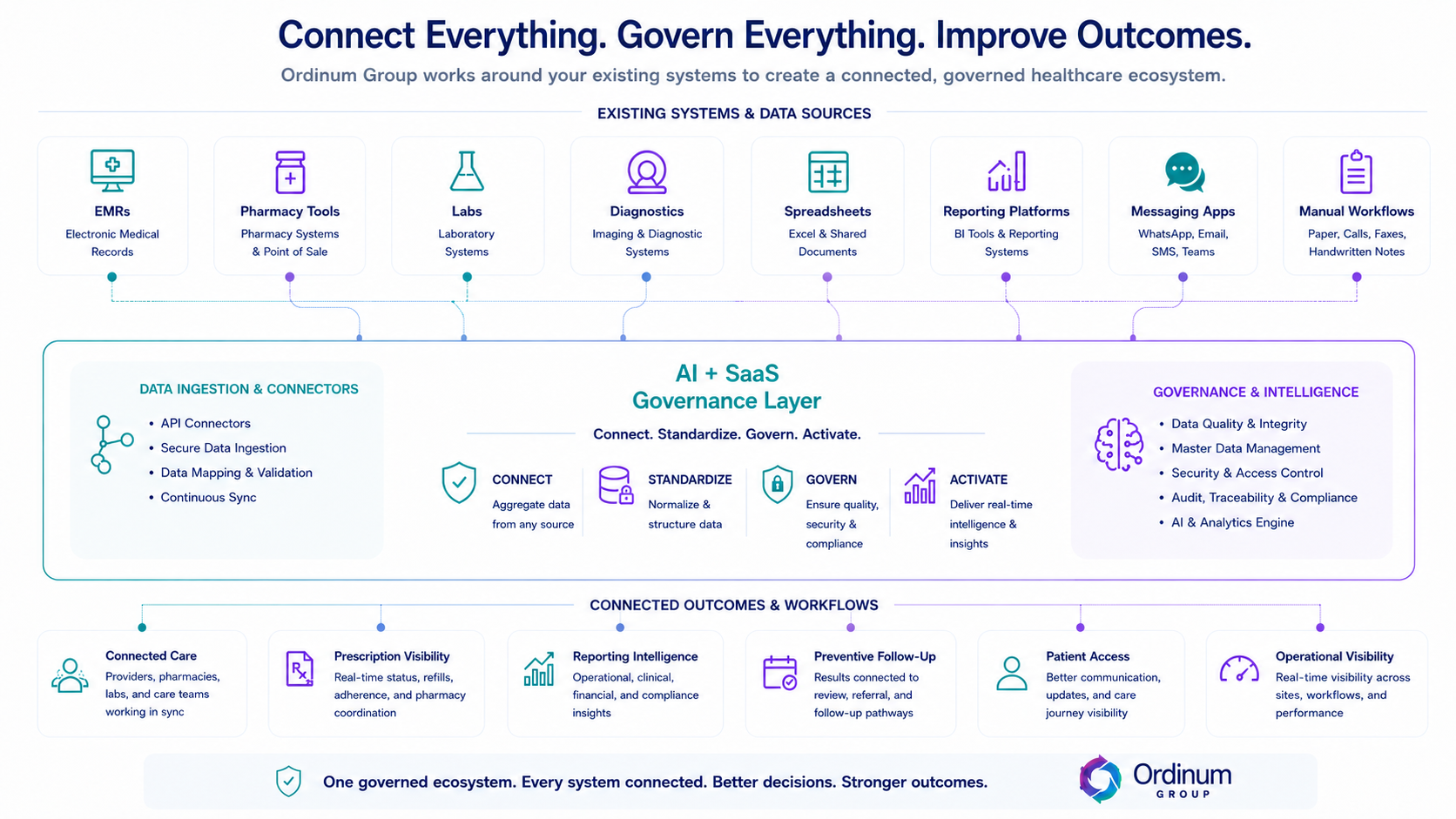
The Core Layers of the Ordinum Group Operating Model
These layers are designed to connect patient access, provider coordination, medication access, governed data, interoperability, and authorized oversight—supporting next actions, responsible ownership, follow-through, and closure across the care journey.
Data & Oversight
Planned support for harmonization, interoperability, traceability, reporting freshness, auditability, and deidentified visibility across care gaps, workflow exceptions, medication-access pressure, and cross-site patterns.
Ordinum Care
Provider, care-team, administrative, and operational workspace designed to surface readiness, care obligations, journey gaps, responsible owners, referrals, laboratory follow-up, and closure evidence.
Ordinum Rx
Medication-access and pharmacy workflow spanning prescription intake, clarification, availability, refills, dispensing, fulfillment, pickup, delivery, exceptions, patient notifications, and verified completion.
Ordinum Access
Patient-facing web and mobile experience connecting appointments, intake, documents, results, prescriptions, referrals, messages, next steps, and follow-through across the care journey.
Services That Support the Full Healthcare Journey
Each service layer is designed to support a practical healthcare operating model: connect fragmented information, coordinate cross-organizational handoffs, clarify responsible owners, support follow-through, and make closure visible to authorized teams.
Data Harmonization & Governance
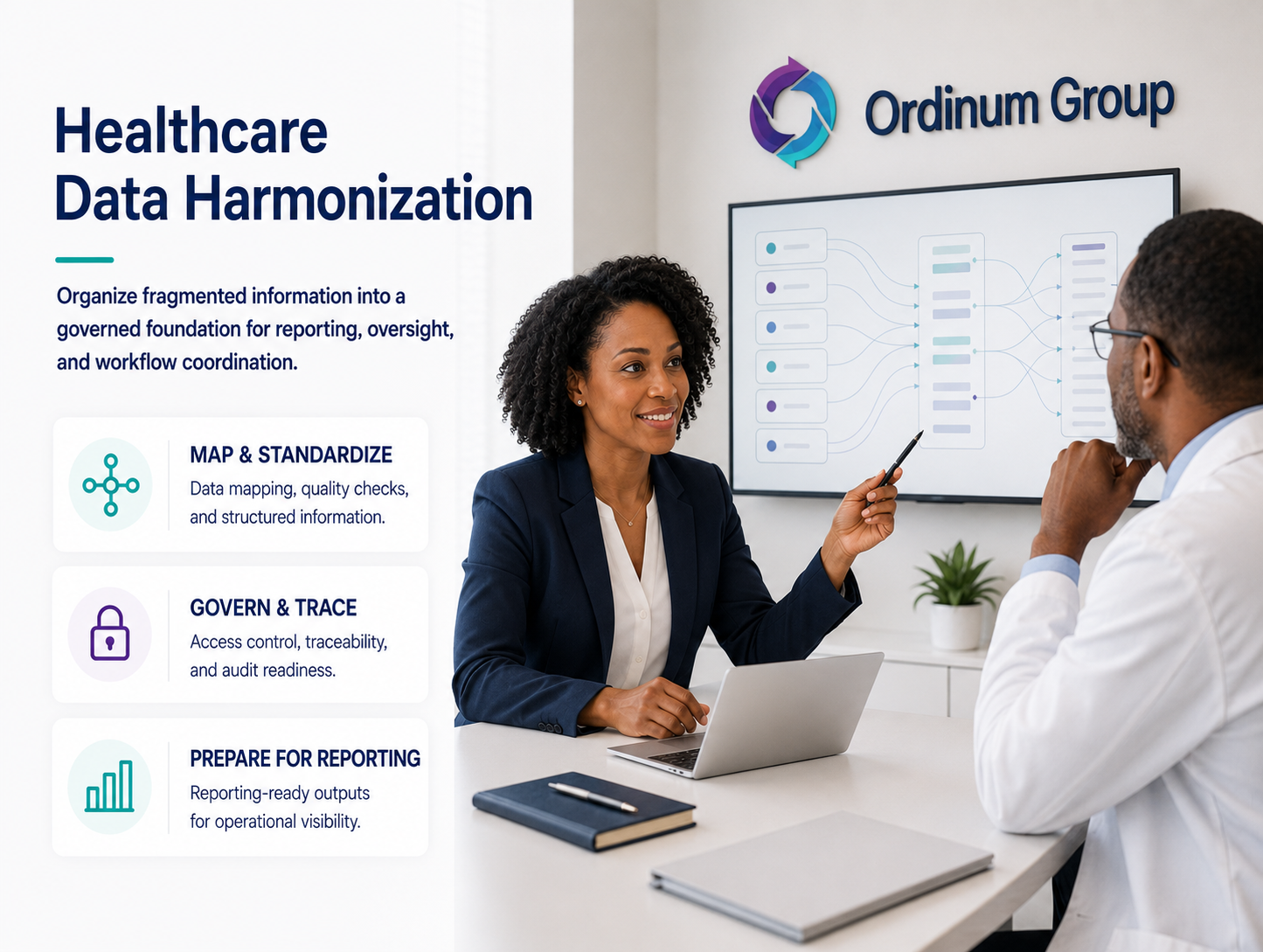
The planned data layer is designed to organize fragmented information into a governed foundation that can support interoperability, workflow coordination, reporting readiness, traceability, and authorized oversight.
- Data mapping, standardization, and quality checks
- Governed access, traceability, auditability, and source visibility
- Reporting readiness and transparent data-freshness indicators
- Support for fragmented, legacy, spreadsheet, and export-heavy environments
Ordinum Care, Ordinum Access & Ordinum Rx
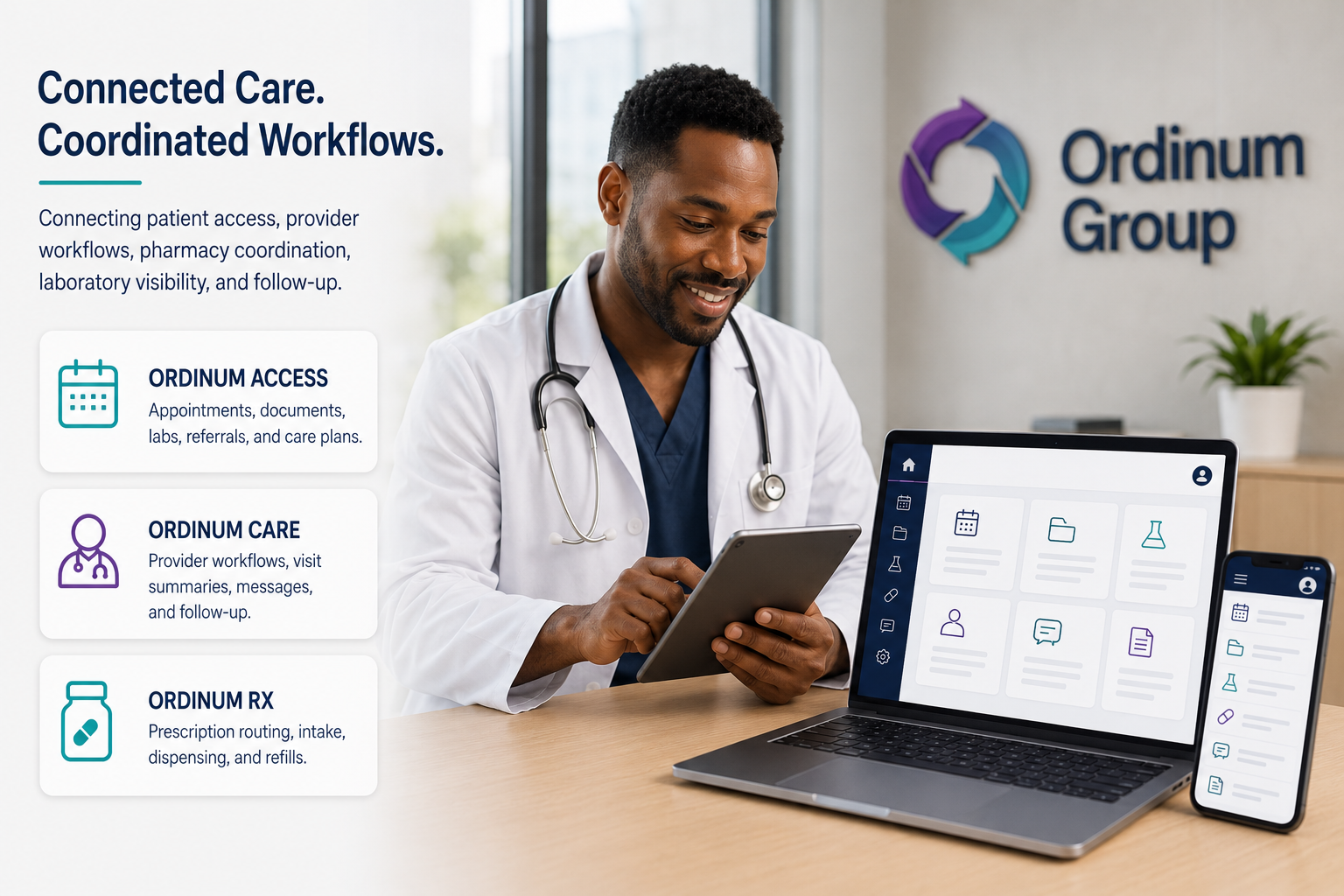
The demonstrated workflow direction connects patient access, provider and care-team coordination, medication access, pharmacy operations, laboratory and referral follow-up, next actions, responsible owners, and closure evidence.
- Ordinum Care for provider readiness, care obligations, journey gaps, referrals, laboratory follow-up, and verified closure
- Ordinum Access for appointments, intake, documents, results, prescriptions, referrals, messages, next steps, and follow-through
- Ordinum Rx for prescription intake, clarification, availability, refills, dispensing, fulfillment, pickup, delivery, exceptions, and completion
- Source-backed operational support with transparent data freshness and human review
Future Expansion — Preventive Diagnostics
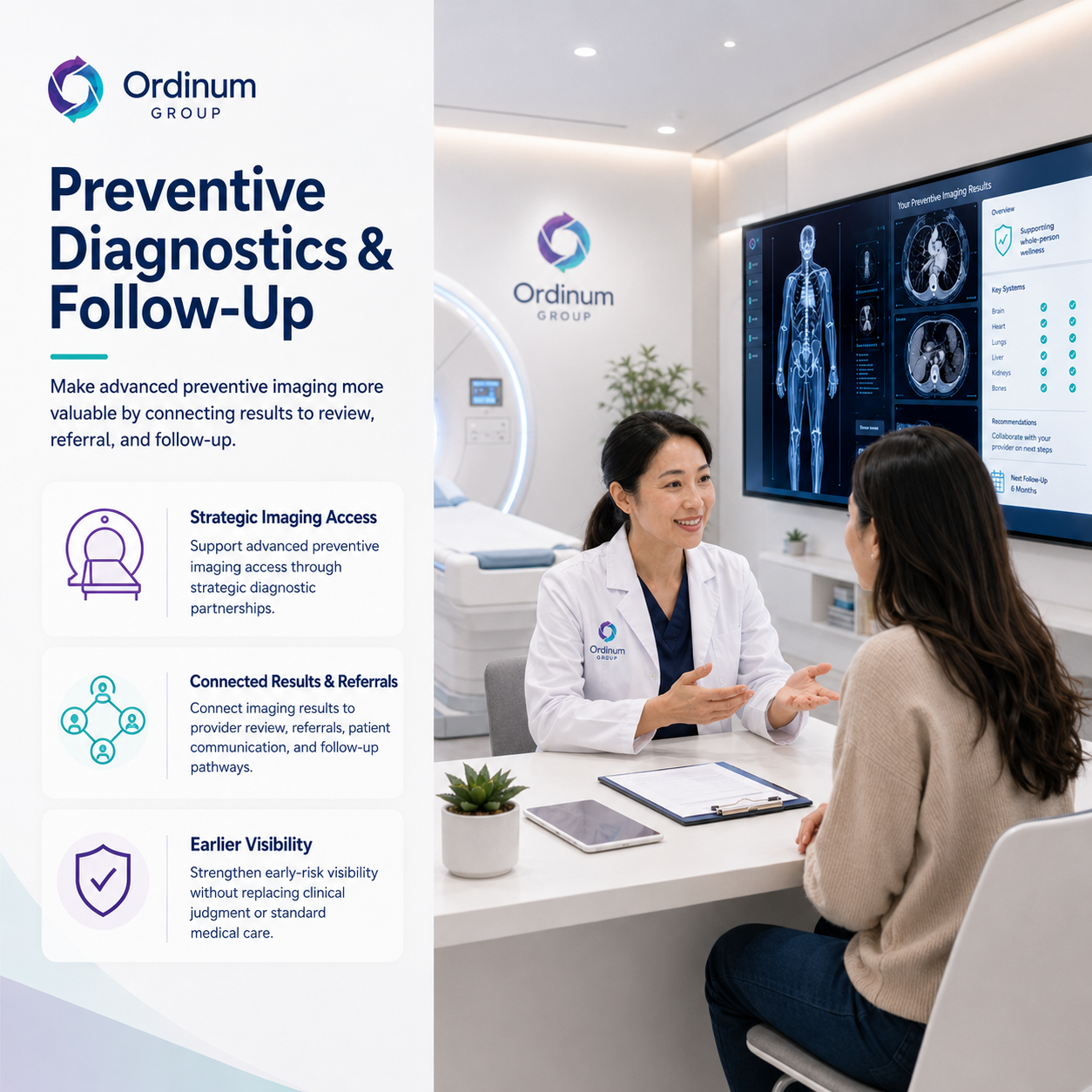
Ordinum Group’s longer-term strategy includes partnership-led access to advanced preventive diagnostics, with the Ordinum Group ecosystem connecting findings to provider review, referrals, patient communication, follow-up, and verified closure.
- Future preventive imaging access through qualified clinical partners
- Diagnostic finding-to-provider-review and referral pathways
- Patient communication, coordinated follow-up, and closure visibility
- Licensed professionals retain clinical authority and standard medical care remains central
Measurable Value for Health Systems & Governments
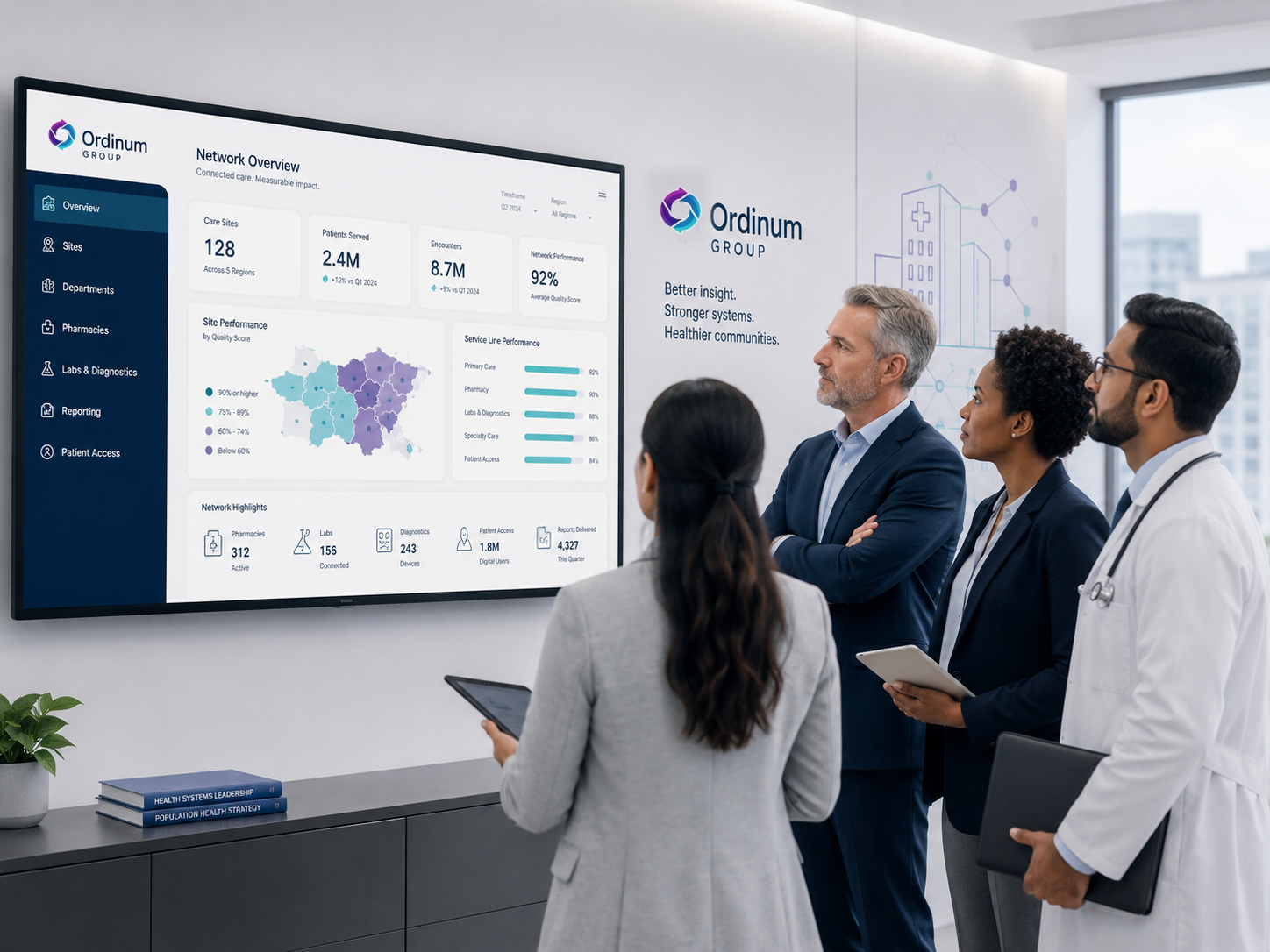
Disconnected records, manual reporting, and limited cross-site visibility make it difficult to see where patients are being lost, which facilities are under pressure, and where medicines, staffing, or follow-up resources are needed. Ordinum Group is being designed to connect those signals across participating organizations so authorized leaders can identify gaps, coordinate action, and measure progress against agreed local baselines.
- 15%–20% lower no-show rate and 15%–20% higher patient next-action completion through clearer reminders, responsibilities, and follow-up workflows
- 10%–15% higher referral completion and 15%–20% higher diagnostic follow-up through tracked handoffs and provider-review pathways
- 10%–15% higher refill completion and 10%–20% faster prescription fulfillment through pharmacy, pickup, and delivery visibility
- 10%–15% higher screening-gap closure, supported by aggregated trend visibility across facilities, locations, and population groups
These are proposed pilot efficiency targets to be measured against participating-site baselines; they are not guaranteed or previously established outcomes.
Designed for the Healthcare Organizations That Need Connection Most
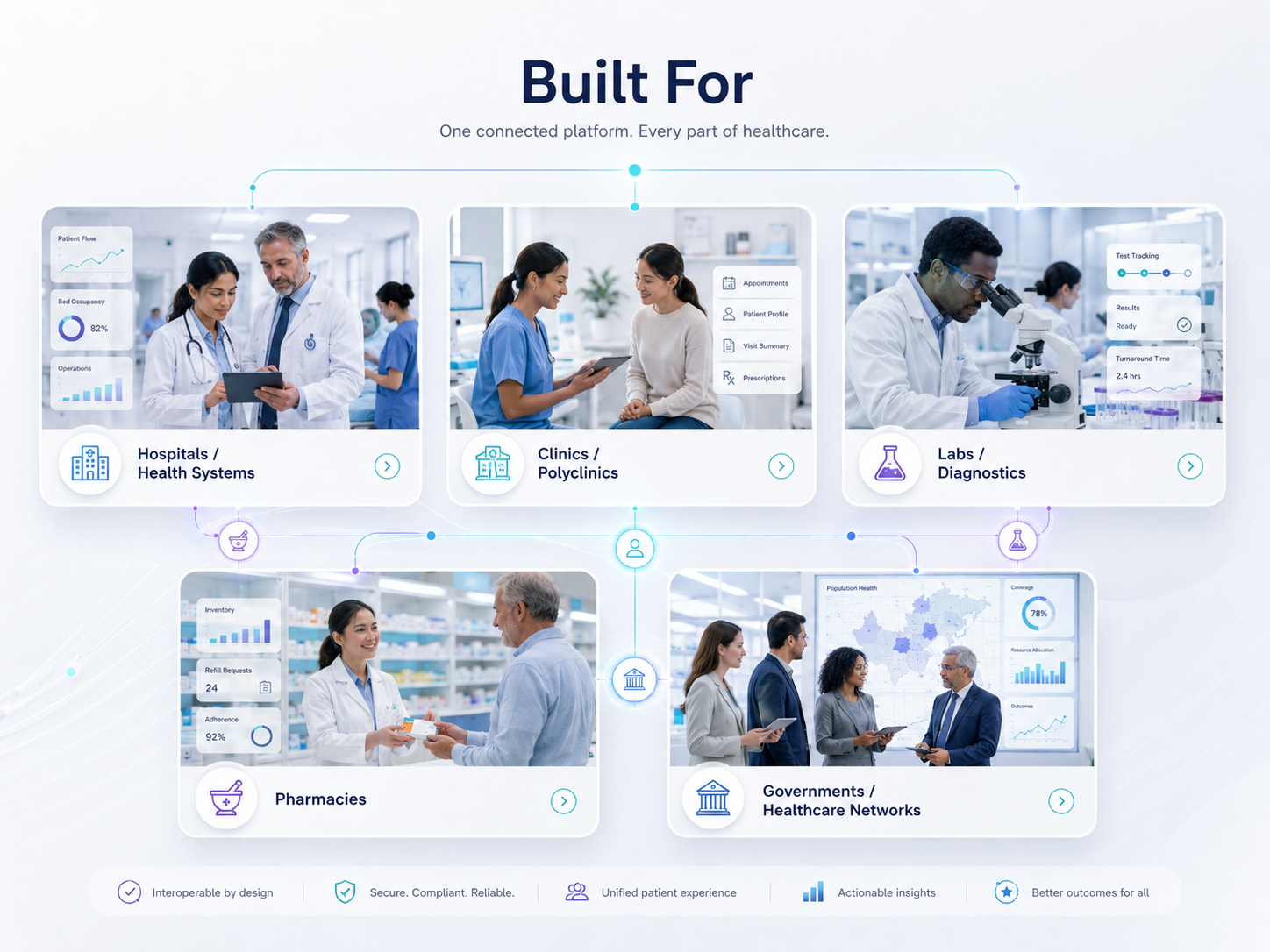
Ordinum Group is being designed for hospitals, clinics, polyclinics, laboratories, pharmacies, provider groups, governments, health networks, and care delivery organizations operating in environments where healthcare information and workflows are fragmented.
The approach supports phased modernization without requiring healthcare teams to abandon every system they already use. It is designed to connect actions across organizational boundaries while strengthening visibility, accountability, and operating discipline.
Connect existing systems. Coordinate next actions. Verify closure.
The Ordinum Group architecture is designed to support governed data, interoperability, source-backed human-reviewed AI, cross-organizational coordination, and deidentified oversight as the platform moves through production engineering and integration.
Start a Conversation About Coordinated Healthcare
Whether your organization is addressing fragmented records, disconnected workflows, medication access, referral or laboratory follow-up, patient engagement, or cross-site visibility, Ordinum Group is being developed to help connect the actions between systems and organizations.
Explore a qualified pilot, initial-market deployment, strategic partnership, or government and network-led pathway aligned with local infrastructure, priorities, and measurable baselines.
Request a 20-Minute Introduction ›